


Membership Trends: Move Your Chamber into the Future

For forward-thinking chamber executives, relevance and value are intertwined. Without relevance, members and investors won’t find value in engagement. Without value, businesses won’t provide funding needed to develop programs and services that make an impact. So what happens when business leaders aren’t sure what your chamber does, even if they have an inkling that you are trying to be helpful? For the Knoxville Chamber in Tennessee, that sentiment helped lead to a new mission-based approach unveiled in May 2020.
In Florida, Tiffany Esposito, CCE, IOM, had been re-evaluating her chamber’s operations, too. The Bonita Springs Area Chamber was experiencing a “slow and consistent decline” in dues revenue, said Esposito, president and CEO of the organization now known as SWFL Inc. “Younger business owners [in our market] want to see exactly what they are getting” when joining an organization, she said. After poring over ACCE’s Horizon Initiative, Esposito, her staff, and board of directors analyzed what the chamber excelled at and what services businesses needed. The result? A free basic membership, coupled with four customizable membership packages that allow businesses to add on exactly the benefits they want.
Although their approaches differ, both chambers redefined their value proposition and impact strategy based on the needs of their communities. Their approaches showcase larger trends, identified below, that are shaping the chamber world. Many trends began before COVID-19, but the pandemic helped accelerate several of them.
Re-evaluation of Dues Structures
When SWFL Inc. unveiled its new dues structure in August 2020, it tossed out its five tiers. The new freemium component—used by well-known companies like Spotify and Dropbox—is designed to eliminate barriers to entry that were insurmountable to some small businesses, Esposito said. The organization’s research shows that more than 90 percent of businesses in its market area have 12 or fewer employees and owners are “extremely transactional,” according to Esposito. To bolster success of the freemium model, the chamber expanded its geographic reach to a three-county area and changed its name from the Bonita Springs Area Chamber to SWFL Inc. In about six months, membership has grown about 50 percent to more than 1,000 members, with a goal of 6,000 members in 18 months. Esposito says a larger membership base will draw in additional businesses interested in being part of such a wide network.
The free basic membership offers a listing in the chamber’s online directory, access to a shared workspace, and access to events at a member rate. Beyond that, businesses can purchase services when and as often as they need them. A la carte options include social media marketing via the chamber’s social network, website marketing packages, even ribbon cuttings and notary services. “We’ve been able to monetize everything we do,” Esposito said. In the future, she plans to add services—and employees—to help businesses scale. These might include additional marketing assistance or administrative support. She believes the chamber now offers “the resources of a consultant” for businesses that can’t afford a consultant.
The chamber also offers four membership packages; its Visibility Package, aimed at business-to-consumer firms, is composed solely of marketing and advertising options since those businesses don’t typically participate in events, Esposito said. Other packages include a Relationship Package for those seeking to grow their network and a Nonprofit Package to help organizations boost their profile and connect with business leaders. The fourth option is the higher-priced Development Package, which includes a strategic business consultation with Esposito to discuss the company’s business goals and create a plan to maximize the benefits of their membership.
Chambers have also tweaked membership models for certain investor levels. For example, partners investing $10,000 or more in the Greater Kansas City Chamber of Commerce receive set benefits as well as opportunities to customize “program selections.” At each investment level, there is an assigned dollar value to the selections from which companies can choose. Options include a choice of event sponsorships or the opportunity for a company rep to serve on one or more policy committees, depending on level of investment. The Chamber for a Greater Chapel Hill-Carrboro (N.C.) offers a monthly micro-enterprise membership. Businesses join and pay online, but just as in the gym membership model, the membership automatically renews each month unless canceled.
Indeed, Kyle Sexton of ChamberThink Strategies in Salem, Ore., said that he has helped more chambers convert to a value-based dues structure in the past year than ever before.
“Value-based tiers are growing in popularity because investors are demanding it, and board members are investors first. Investors want clear, unique and distinguishable value that lets them know not only what they get, but what they are supporting — and which room they get to be in,” he said. “I guide chambers to build investor level menus that acknowledge that you're not running a membership organization; you're running four different membership organizations. This allows businesses to tell us if they are going to be an aspirational investor or a transactional member.”
Transition to the Missional Mindset
Since the Knoxville Chamber made the transition to the missional-investor model, Mark Field, CCE, IOM, the chamber’s senior vice president of investor development and experience, has never been so energized about his work. Knoxville’s new focus came one year after President and CEO Mike Odom arrived from Round Rock, Texas. In fact-finding conversations with business leaders, Odom learned the “business community was not sure what we did,” said Field. Many businesses thought the organization focused more on attracting new businesses than helping existing ones expand.
In short, business leaders had become disenchanted with membership features and benefits, according to Field. The chamber rolled out its “Path to Prosperity” strategic vision focusing on six core components--infrastructure, talent, and business climate, among them--that will drive regional economic prosperity for everyone. Field said the chamber no longer asks people to “join an organization that some didn’t think was worthwhile in the first place but to invest in the work we are doing.” Businesses are asked to invest at the highest level they can afford, regardless of sales or headcount. “It’s a value investment, not a return on investment,” he says. The key to thriving with this model is to ask the community what it needs and what barriers to success exist, according to Field.
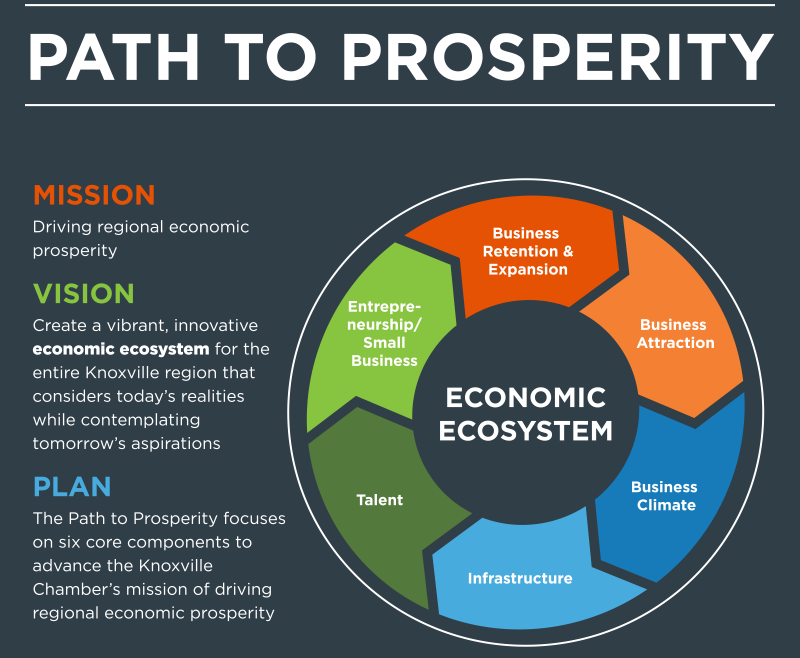
The missional approach necessitated internal changes. Account representatives became investor development consultants. Because of a longer sales cycle, the chamber tweaked its compensation program with greater emphasis on base pay. Team selling increased significantly, and investor consultants talk more often to CEOs, who want them to “cut to the chase” and provide statistics on progress and impact. For example, when a consultant mentions the local “brain drain,” CEOs want to know how many college students leave town after graduation. Instead of a lengthy PowerPoint presentation showcasing different events, the chamber provides a two-sided marketing piece outlining its mission, the core components for driving prosperity, and six key priorities. The singular focus on mission has broken down organizational silos, said Field, as everyone works toward common goals.
Evolution of Sponsorships
Even before pandemic-related event cancellations, chambers increasingly sold sponsorships around initiatives, said Cathi Hight, president of Hight Performance Group Inc. in Austin, Texas. For example, investors in the Greater Kansas City Chamber of Commerce can sponsor efforts to improve regional transportation systems. Depending on investment level, sponsors also accrue benefits, such as recognition at transportation-themed events or a seat on the Transportation Advisory Committee. To tweak a sponsorship plan effectively, chambers must understand what members want to accomplish and align opportunities to motivations, said Hight, keeping in mind that multiple contacts at large organizations control different budgets and have different goals.
Put another way, “Sponsorships have to be customer-centric and appealing to businesses," said Aaron Nelson, IOM, president and CEO of The Chamber for a Greater Chapel Hill-Carrboro in North Carolina. He advocates dropping “Gold” and “Silver” labels and being more creative when naming sponsorship levels, as well as in designating what businesses can underwrite. Case in point: “Aaron’s Bow Tie Sponsor.” Every year, at the chamber’s annual meeting, the bow tie sponsor appears on stage to unveil the dapper accessory that will replace the one Nelson arrived wearing.
Introduction/Expansion of Fee-for-Service Offerings
Do your employees have skills needed by local businesses? Perhaps your digital marketing manager could provide search engine optimization services or your research staff could write custom reports about a specific industry. Some chambers have created concierge services to help newcomers acclimate to a community with the aim of attracting and retaining top employees. Fee-for-service offerings give your chamber an added revenue source and an opportunity to demonstrate value by providing expertise from a trusted source. When included in a membership package, a vital service can become a recruitment tool or an opportunity to upsell a current member. For detailed case studies, read “Chambers Explore Service Revenue Opportunities.”
Re-evaluation of the Role and Format of Events
 It’s a familiar question: What events are worth continuing and which ones should be axed? This topic is top of mind following widespread event cancellations. Some events, such as parades and festivals, could not transition successfully to a virtual format. “The pandemic caused many sacred cows to be barbecued,” said Sexton. Some chamber executives secretly breathed a sigh of relief over the necessary cancellation of a community event that took lots of effort and staff time, he said. What will happen when COVID restrictions ease?
“So many things are not coming back,” Sexton predicts. While eliminating one or more major events may alleviate certain challenges, it presents others. What role does your event staff take on? What happens to members whose main contribution was helping to organize events? How do you channel the energy and enthusiasm of an event committee in another way? At the same time, Sexton said that some chambers added outdoor events such as bocce ball tournaments, which he believes will outlast the health crisis that spawned them.
It’s not simply a reckoning over which events to hold, but over which format makes the most sense, said Hight. With experience hosting virtual events, with varying degrees of success, chambers could continue to host virtual gatherings. How will the potential for increased attendance at virtual events, combined with reduced costs, enhance the bottom line to drive mission? Will sponsors be more likely to fund an event with a larger audience? Will some events have both a virtual and in-person component?
Hight believes the challenges of economic recovery post-pandemic will further accelerate an emphasis on initiatives over events. Chambers will realize that “some of the workaround workforce development, for example, will be more important than before,” she said.
Focus on Data to Drive Decisions
|
Aaron Nelson |

“I think the best-in-class chambers are keeping up with a whole lot of data both internally and related to the community,” said Nelson. He likens operating a chamber without tracking key metrics to driving a car without a speedometer and odometer. Nelson has compiled data about his chamber’s events on a spreadsheet for at least seven years, including each event’s net promoter score, net revenue, and attendance, among other indicators.
Color codes indicate how closely events align with three key areas of the chamber’s mission. The data help him decide whether an event needs to be revamped, or in some cases, eliminated. He also tracks persistence rates to learn more about membership retention trends. Nelson said ACCE’s dynamic benchmarking study is “super valuable,” and advocates benchmarking privately with select peers across the country. “Start collecting data now,” he suggested. “And start reporting it. The first year you do it is not as interesting as when you do it for five years.”
New or Renewed Attention on Foundations
|
David Pruente, IOM |

There’s heightened awareness that challenges once considered social issues are business issues, too, said David Pruente, IOM, senior vice president, strategic partnerships, for the Greater Kansas City Chamber of Commerce. As chambers expand their roles around social justice and DEI work, for example, their foundations become increasingly relevant. Business owners who balk at a dues increase may be happy to donate to a foundation whose mission they support. On the other hand, members who don’t support a certain community-based initiative need not worry that their dues are being used for that purpose. Benefactors without ties to the chamber may also enthusiastically support an initiative such as the program through the Greater Kansas City Chamber that finds jobs for formerly incarcerated people. Foundations are also eligible for grants and other funding streams that 501(c )(6) organizations are not.
Although the Greater Kansas City Chamber’s Foundation has been in place for about a decade, it now has a more defined focus. Additionally, since 2018, written agreements with the chamber’s top 100 investors outline that a certain percentage of their investment will be earmarked for the foundation, Pruente said. Many chambers have formed a foundation for the first time recently while others are leveraging a nearly dormant one. Find more resources about chamber foundations here.
Expanding Scope of Work to Include Minority Businesses
|
Omar Cuevas |

Chambers invested in inclusion must do more than hang out a welcome sign to engage minority business owners. It takes an understanding of the concerns and challenges of marginalized communities and “the right people on staff that represent that community,” said Omar Cuevas, vice president of sales and marketing for the Grand Rapids Area Chamber of Commerce (Mich.). That point was emphasized by focus group members who said, “`We don’t see ourselves at the chamber,’” he said. In response, the chamber staff now includes a Latino business liaison and an African American business liaison.
It’s also critical to “build key partnerships with centers of influence in those communities, such as elected officials and community leaders,” Cuevas said. In 2020, at the height of the pandemic, the chamber asked investors to step up and provide emergency grants for struggling small businesses. The county also selected the chamber to manage applications for CARES Act funded grants. In total, the chamber distributed more than $35 million in grants, with minority businesses accounting for nearly 50 percent of recipients. That was no accident. The chamber promoted the program via minority media and knocked on doors with elected officials trusted by marginalized communities. As a result, memberships from minority businesses have begun trickling in. “It’s about creating value first, and then members will follow,” Cuevas said. Chambers can’t simply be an expense, but “a necessity for survival.”
Leveraging Communication Channels to Deliver Value
The old adage that content is king is true more than ever. In the past year, Sexton noticed an explosion in blogs as chambers provided COVID updates to their communities. Some chambers developed sophisticated web portals with videos, links and extensive information about the pandemic. As a result, “chambers increased their visibility to future members in a new way,” says Sexton. This allowed potential members and investors to understand the work of a chamber like never before—and generated a lot of community goodwill, he said. How will chambers capitalize on this moving forward? How might they change their communication strategies to demonstrate, as well as deliver, value?
Chamber efforts to help members navigate through the pandemic demonstrated many of the key communications concepts explored in the Horizon Initiative.
- Filter Function: Serve as a filter for members by making sense of the endless stream of information hitting their inboxes and feeds. Scan, filter and analyze data from different sources and provide meaningful insight.
- Robust Feedback Loops: Harness the two-way power of online platforms to gather real-time, actionable feedback from members and stakeholder. Identify questions and challenges quickly and provide expert answers and insight.
- Speed: In the midst of a global pandemic, chambers showed the ability to quickly adapt and launch new communications, programs and resources to support businesses and the community.


.png)
