


Creating Calm in Event Chaos

According to a 2019 CareerCast survey, event professionals have the 6th most stressful job out of 200 occupations surveyed. We asked 30 ACCE chamber event professionals how they coped with the stresses of planning and pulling off creative and impactful chamber events. Here is what they had to say.
The Stress is Real
ACCE event planners are pros at managing event timelines, accommodating last-minute changes, keeping track of every last event detail and managing multiple events at the same time. But these tasks and others can cause stress, anxiety, and burnout. “Event planner burnout is a real thing, especially in the chamber event world,” said Katie Orr, manager of events and Access Tallahassee at the Greater Tallahassee Chamber. “Often, you’re finishing one event as multiple events wait in the wings with no time to catch your breath. Your audience is largely the same, adding to the pressure to provide an even better experience than the previous.”
Organize, Delegate, Designate
Planning and organization are critical to managing stress for event planners. Anna Richards, manager of programs and events at the Greater Akron Chamber, recommends experimenting with different organizational tools, including calendars, whiteboards and technology. “There are too many balls in the air to remember everything all the time.” And don’t rule out good old Excel spreadsheets, which are lifesavers for many. They keep Gabrielle Woods, community and special events manager at the Walton Area Chamber, from going crazy. “I keep a spreadsheet on everything. That helps me stay organized and sane.”
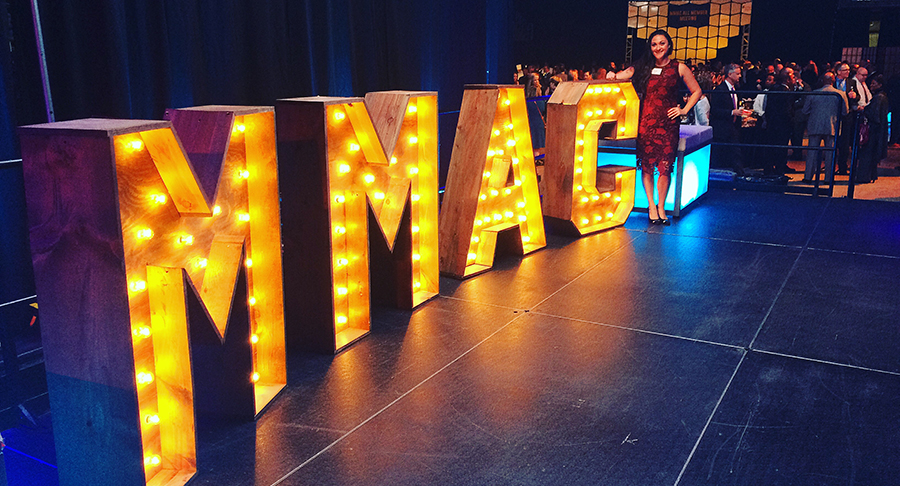 |
| Sarah Zens from the Metropolitan Milwaukee Association of Commerce |
Sarah Zens, events manager at the Metropolitan Milwaukee Association of Commerce, manages more than 200 events a year ranging from 30 to 1,300 in attendance. One of her mantras is “write it down.” “To-dos never fail to pop into your head at the most inconvenient times,” she said. “When a thought pops in your head, write it down and let it go. Ruminating on an idea or worrying can be mentally exhausting.”
Richards stressed the importance of delegation. “I’ve learned that sometimes people don’t want to share responsibilities because they feel like if they don’t have control they won’t be needed. I’ve realized that by allowing others, at times, to do things allows my schedule to clear up to learn other tasks and expand my abilities, making me more valuable.”
Sydney Doctor, director of events at Greater Louisville Inc., agreed. “Events are a million small details that add up to attendee experience. You can’t do it all. Don’t forget to designate who is responsible for what. Hold those people (and yourself) accountable for staying on task and on time.” She also recommends building positive relationships with vendors throughout the event planning process and thanking them before, during, and after to make sure they know how grateful you are for their help. Working with them closely as respected professionals will help them help you make your events run smoothly and reduce stress and anxiety.
And plan for the unexpected. Cassie Stoner, marketing and events manager at the Eugene Area Chamber, includes a line item for incidental expenses and an extra hour or two into the event timeline for emergencies.
Work Out to Prevent Burnout
The consensus is that exercise is key to stress management (and experts agree). ACCE event professionals kayak, hike, run marathons, teach Pure Barre, schedule regular after-work workouts and take stress-relieving walk breaks at work. Colleen Schipsi, program manager at the Michigan West Coast Chamber, prefers yoga. “I found this awesome app called Down Dog which allows me the ability to customize the type of yoga session I’m feeling that day,” she said. “I enjoy being able to use it in the comfort of my own home.”
Boundaries are Key
“In the event industry, we are often surrounded by people, noise, and chaos with very little alone time,” Zens said. “It’s okay to say no to personal and social invitations when you need some ‘you time.’”
Ashley Hilsman, events director at the New Orleans Chamber, agrees. “The most important thing I try to do is make quiet time for myself, whether it’s staying in all weekend after multiple events or turning your cell phone to do not disturb when you get home after a stressful day. When you have the rare downtime, take that time for yourself. Don’t start something new that doesn’t have to be done that day.”
 |
 |
| Ashley Hilsman from the New Orleans Chamber | Anna Richards from the Greater Akron Chamber |
Take a Break, Treat Yourself
It’s helpful to take breaks to re-energize and refresh throughout the day and after big events. Keegan Aalderink, member engagement coordinator at the Michigan West Coast Chamber, is an avid puzzler. “My brain really likes to see things go from nothing to something,” she said. “I find doing puzzles to be therapeutic in a way, it’s something I can control, and it doesn’t take too much brainpower.”
Gabrielle Woods, community and special events manager at the Walton Area Chamber, gives herself small rewards and incentives throughout her workday. “I will set a goal to call 25 possible sponsors. After I make those calls, I allow myself 10 minutes of social media time or a 10-minute walk outside. This helps me stay on track and be productive all day long.”
Scheduling breaks between events is also important. Rosa Cavazos, vice president of resource development and events at the Greater Topeka Partnership, offers this advice: “Take the day off after an event to decompress and just let your mind rest. When you have put so much work into an event, it is important for you to relax the following day.”
Reading, listening to music, meditating and spending time with pets and loved ones are all ways that ACCE event planners cope with the stress of their jobs.
Keep Things in Perspective
Chamber event professionals are central to planning and delivering the iconic chamber events that help drive business and community prosperity. But, it’s crucial to keep things in perspective. Orr puts it this way: “I try to always remember that there’s only so much you can do as the event coordinator,” she said. “Like it or not, so many aspects of an event are out of your control – something unexpected could happen at the venue, your speaker could have a flat tire and not show up – but always keep the mantra ‘I’m doing the best that I can.’”


.png)
